


Trip Highlights
- Explore the remote and peaceful Tsum Valley
- Experience traditional Tibetan-Buddhist culture
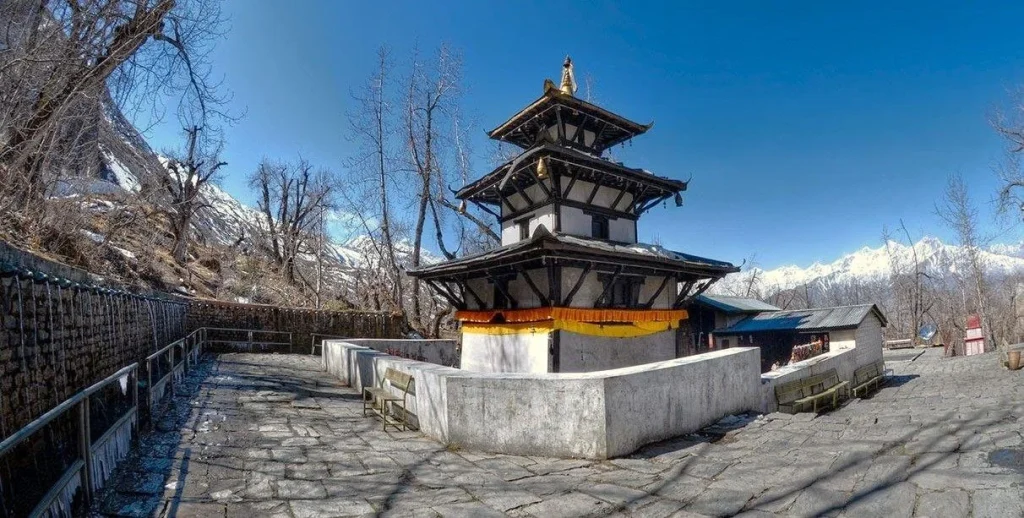
- Visit Mu Gompa and Rachen Gompa
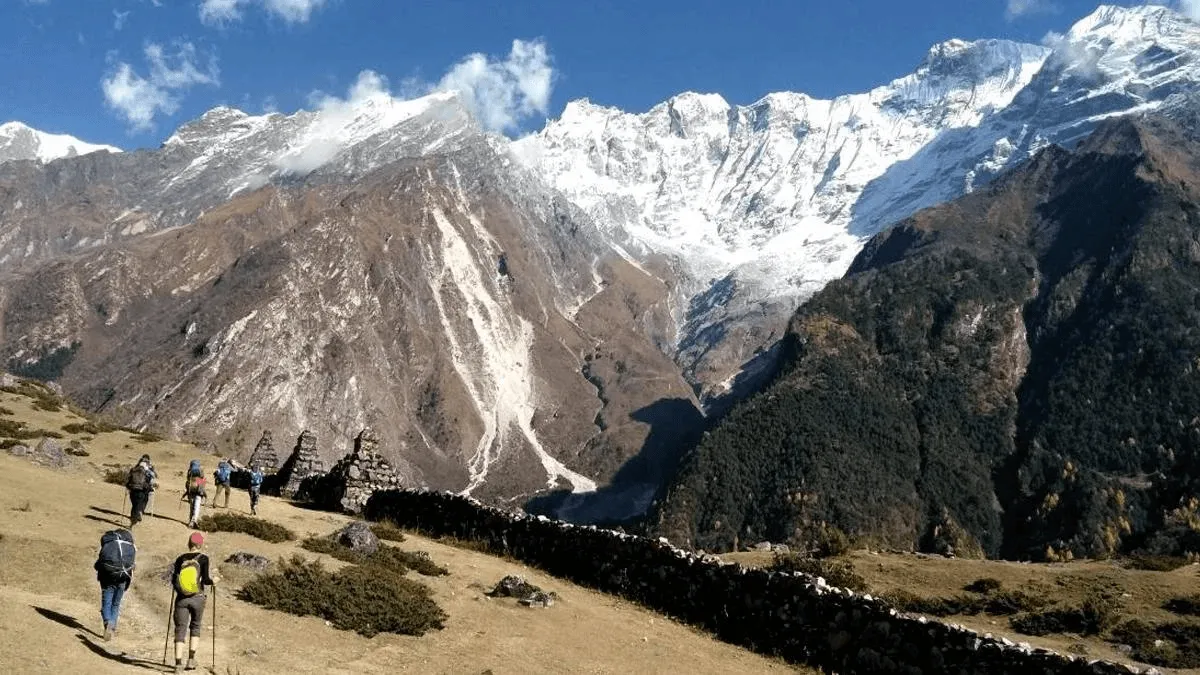
- Enjoy views of Ganesh Himal, Sringi Himal and Boudha Himal
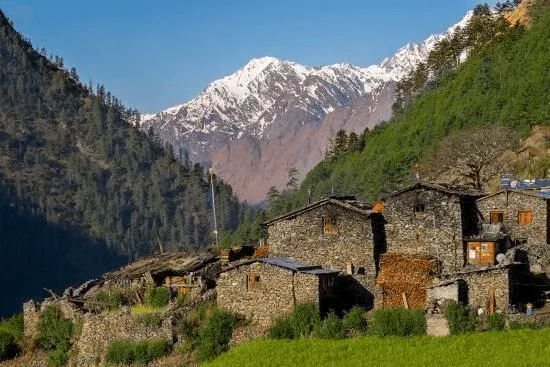
- Walk through traditional villages such as Chumling, Chhokang Paro and Nile
- Discover ancient monasteries, chortens and mani walls
- Experience authentic Himalayan village life

Overview
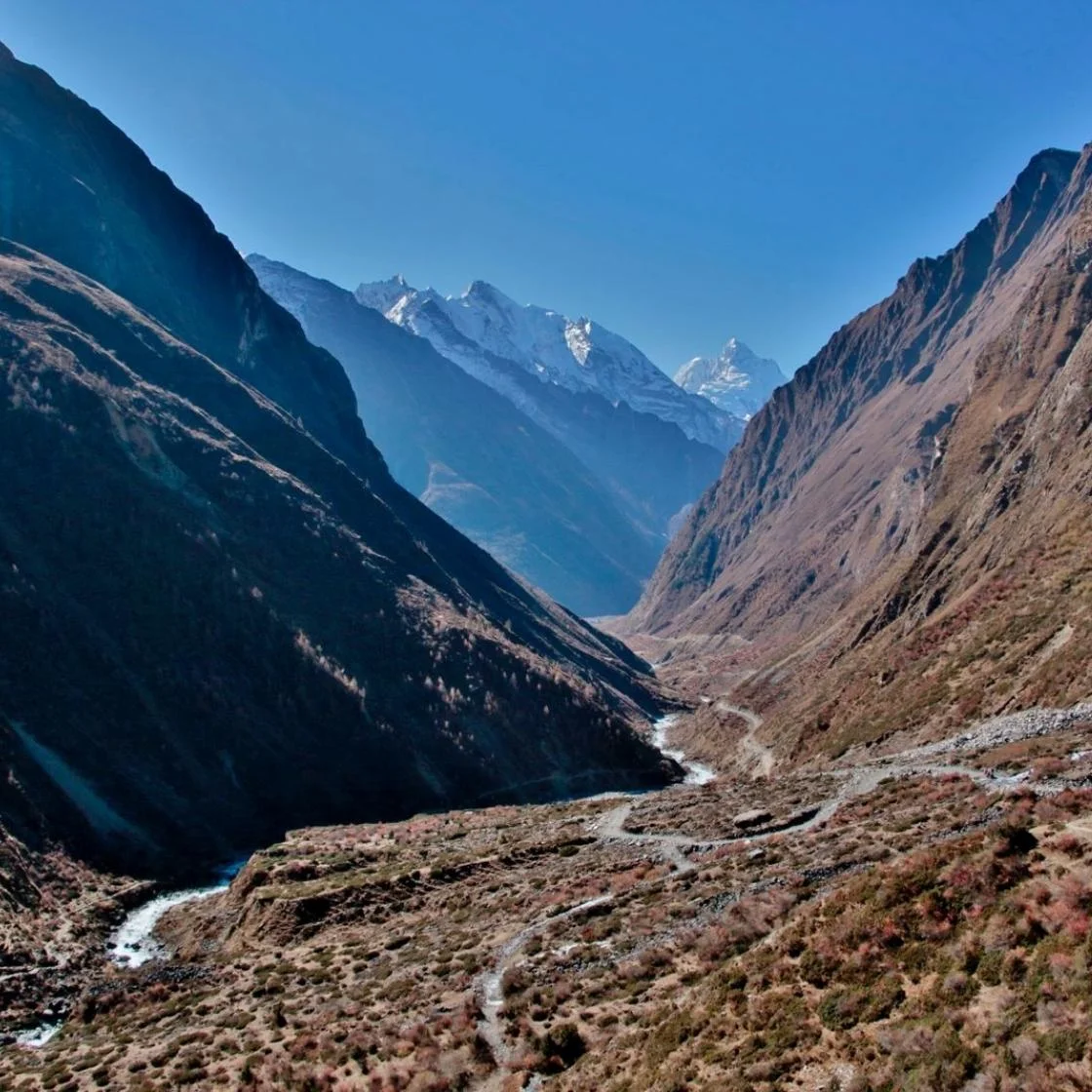
The Tsum Valley Trek is an extraordinary journey into one of Nepal’s most secluded and culturally preserved Himalayan valleys. Often called the “Hidden Valley,” Tsum Valley lies in the northern part of Gorkha district, surrounded by spectacular peaks including Ganesh Himal, Sringi Himal, and Boudha Himal. The trek combines dramatic mountain scenery with centuries-old Tibetan Buddhist traditions, making it ideal for travelers seeking a peaceful and authentic Himalayan experience.
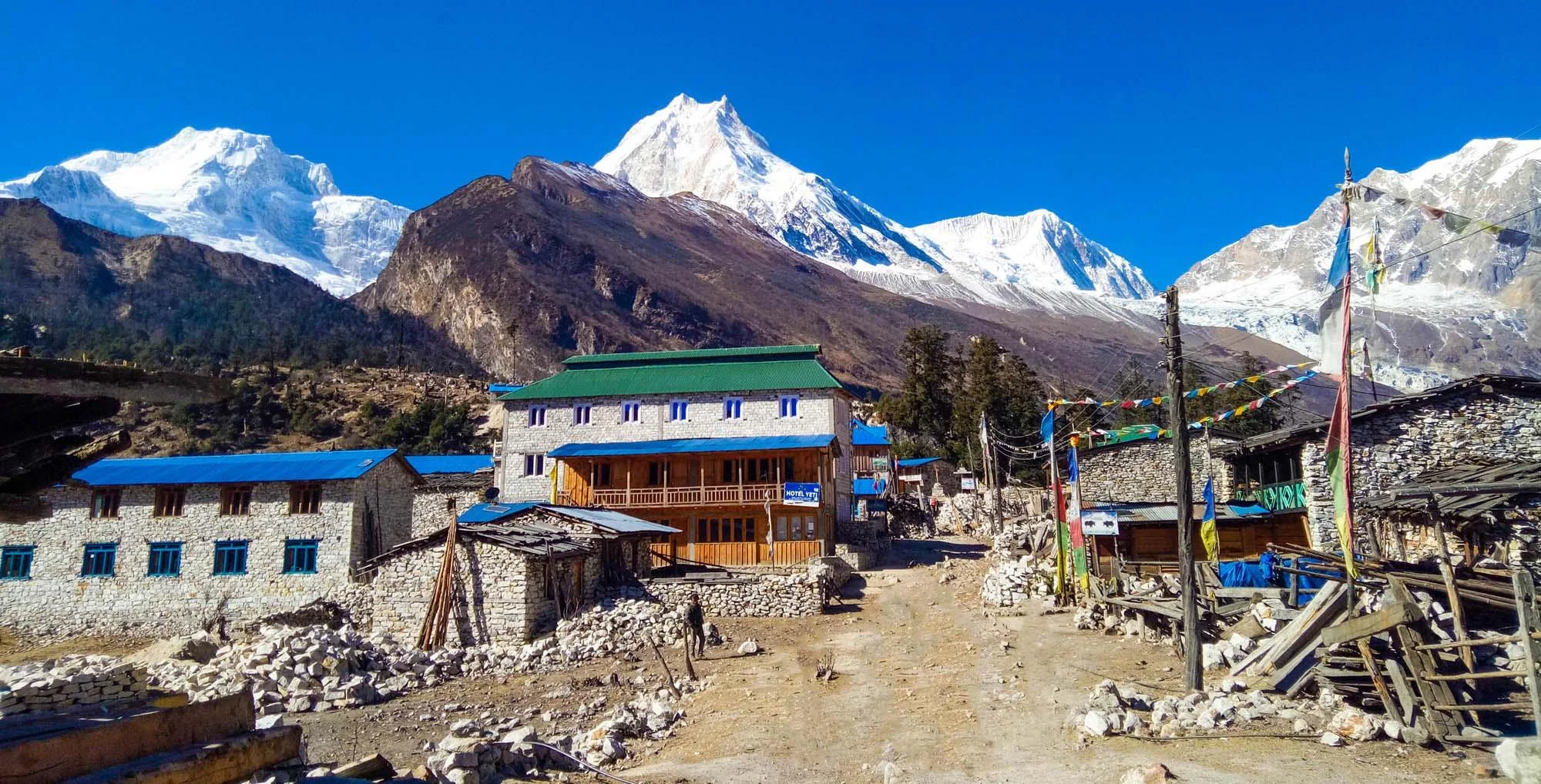
As you trek through beautiful villages such as Chumling, Chhokang Paro, Nile, and Mu Gompa, you will encounter ancient monasteries, prayer wheels, mani walls, chortens, and traditional stone houses. The valley is particularly famous for Mu Gompa and Rachen Gompa, important Buddhist monasteries that showcase the area’s deep spiritual heritage.
Place You will Visit
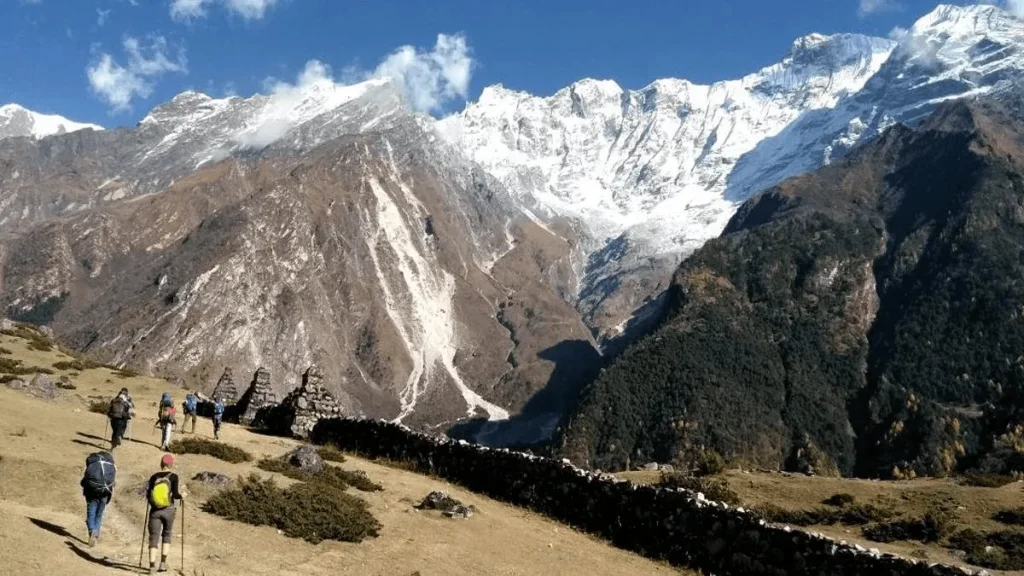
1.Machha Khola
The scenic starting point of the trek.
2. Jagat
A traditional mountain village and gateway to the Manaslu region.
4. Lokpa
The gateway to the remote and peaceful Tsum Valley.
5.Chumling
A scenic village offering beautiful views of Ganesh Himal.
6. Chhokang Paro
A traditional Tibetan-influenced village with stone houses, monasteries, and mountain views.
7. Nile
A high-altitude settlement located near the Tibetan border.
8. Mu Gompa
The highest and one of the most important monasteries in Tsum Valley.
9. Rachen Gompa
A historic Buddhist nunnery known for its spiritual atmosphere and traditional architecture.
10. Gumba Lungdang
A peaceful monastery surrounded by spectacular Himalayan scenery.
11. Ganesh Himal Base Camp
A rewarding excursion offering impressive views of the Ganesh Himal range.
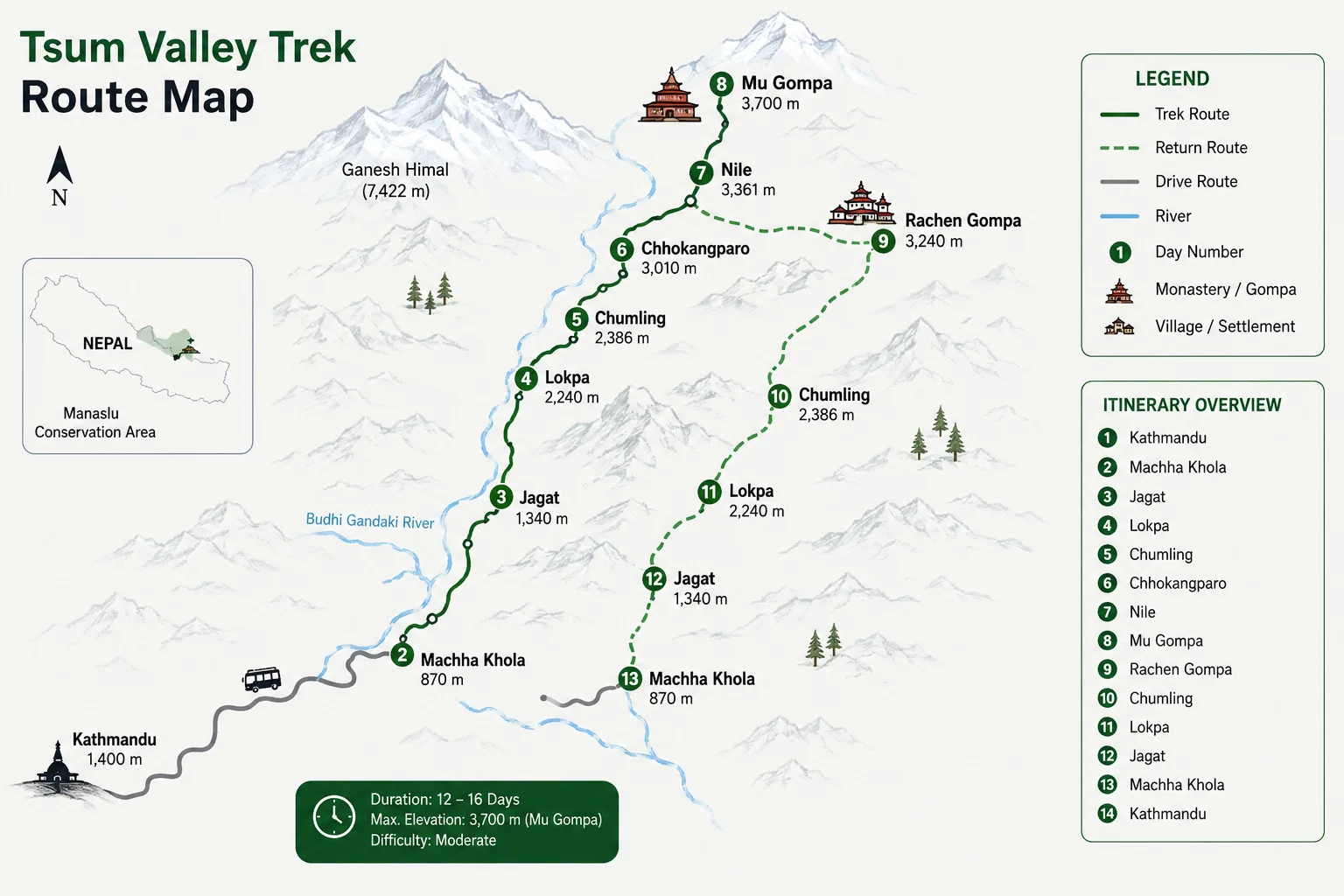
Tsum Valley Trek – Itinerary
Day 1: Kathmandu Arrival
Arrival in Kathmandu, trek briefing and preparation.
Day 2: Kathmandu to Machha Khola
Scenic drive through hills and rivers to Machha Khola.
Day 3: Machha Khola to Jagat
Trek through forests, waterfalls and traditional villages to Jagat.
Day 4: Jagat to Lokpa
Walk through beautiful landscapes and enter the remote Tsum Valley.
Day 5: Lokpa to Chumling
Trek through dense forests with spectacular views of Ganesh Himal.
Day 6: Chumling to Chhokangparo
Continue through traditional villages and experience Tibetan-influenced culture.
Day 7: Chhokangparo to Nile
Walk through the upper Tsum Valley, passing ancient monasteries and villages.
Day 8: Nile to Mu Gompa
Trek to Mu Gompa (3,700 m), the highest point and spiritual highlight of the trek.
Day 9: Mu Gompa Exploration
Explore Mu Gompa and nearby Himalayan landscapes before returning toward Nile.
Day 10: Nile to Chumling
Descend through the beautiful Tsum Valley back toward Chumling.
Day 11: Chumling to Lokpa
Retrace the trail through forests and traditional settlements.
Day 12: Lokpa to Jagat
Continue downhill through scenic Himalayan landscapes to Jagat.
Day 13: Jagat to Machha Khola
Final trekking day through forests, rivers and mountain villages.
Day 14: Machha Khola to Kathmandu
Continue through the rugged Mustang landscape and return to Chele.
Essential Information
The Tsum Valley Trek is a moderate-to-challenging Himalayan trek suitable for trekkers with a reasonable level of fitness and some previous trekking experience. The trek usually takes around 14–16 days and reaches a maximum elevation of approximately 3,700 m at Mu Gompa. The best seasons are spring (March–May) and autumn (September–November), when the weather is generally stable and the mountain views are clear. Trekkers need the required restricted-area and conservation permits, and a licensed guide is required in the Tsum Valley. Accommodation is mainly available in local teahouses and homestays, providing an opportunity to experience traditional Himalayan culture and hospitality.
Explore the Destinations
Inclusinons And Exclusion
- Airport pickup and drop-off by private vehicle.
- Kathmandu hotel accommodation with breakfast.
- Teahouse accommodation during the trek.
- All meals (breakfast, lunch, and dinner) during the trek.
- Experienced, licensed trekking guide and porters.
- Guide and porter salary, food, accommodation, and insurance.
- Tsum Valley and Manaslu Conservation Area permits.
- TIMS card and required local permits.
- Ground transportation to and from the trekking starting/ending point.
- Basic first-aid kit and necessary trekking equipment for staff.
- Government taxes and official service charges.
- International flights and Nepal visa fees.
- Travel and medical insurance.
- Personal expenses such as laundry, phone calls, and Wi-Fi.
- Personal trekking equipment and clothing.
- Hot showers and extra beverages during the trek.
- Tips for guides, porters, and drivers.
- Emergency evacuation and rescue costs.
- Extra accommodation or meals due to delays, illness, or unforeseen circumstances.
- Any expenses not mentioned under the inclusions.