



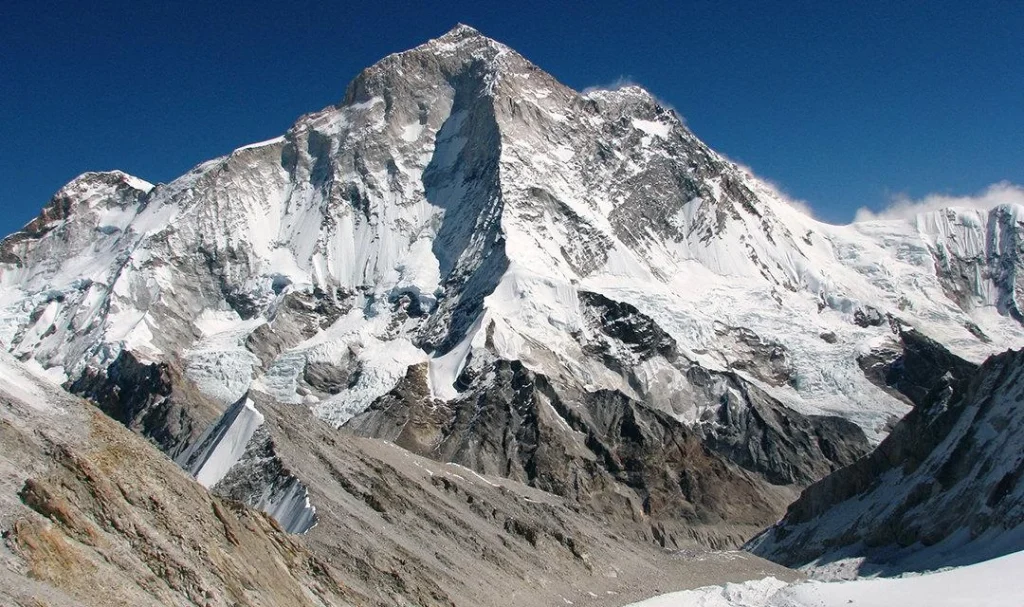
Trip Highlights
- Summit of Makalu – 8,485 m
- Technical and challenging high-altitude climbing
- Stunning views of Everest, Lhotse, Baruntse and Chamlang
- Remote and less-crowded Himalayan wilderness
- Makalu Glacier and high-altitude landscapes
- Explore Makalu-Barun National Park
- Experience traditional Sherpa and Rai communities
Overview
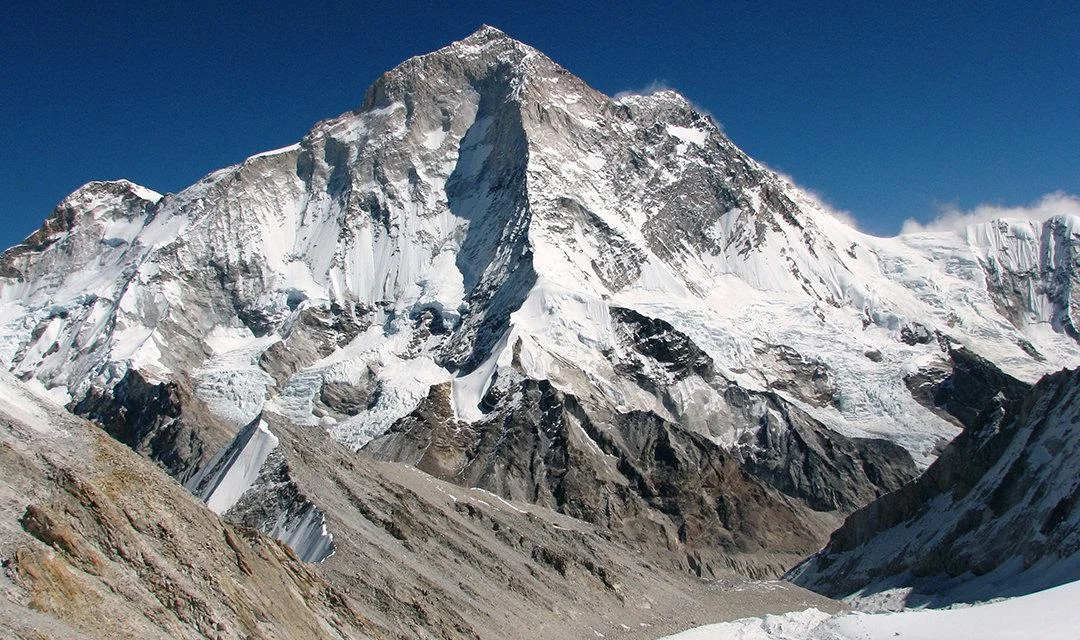
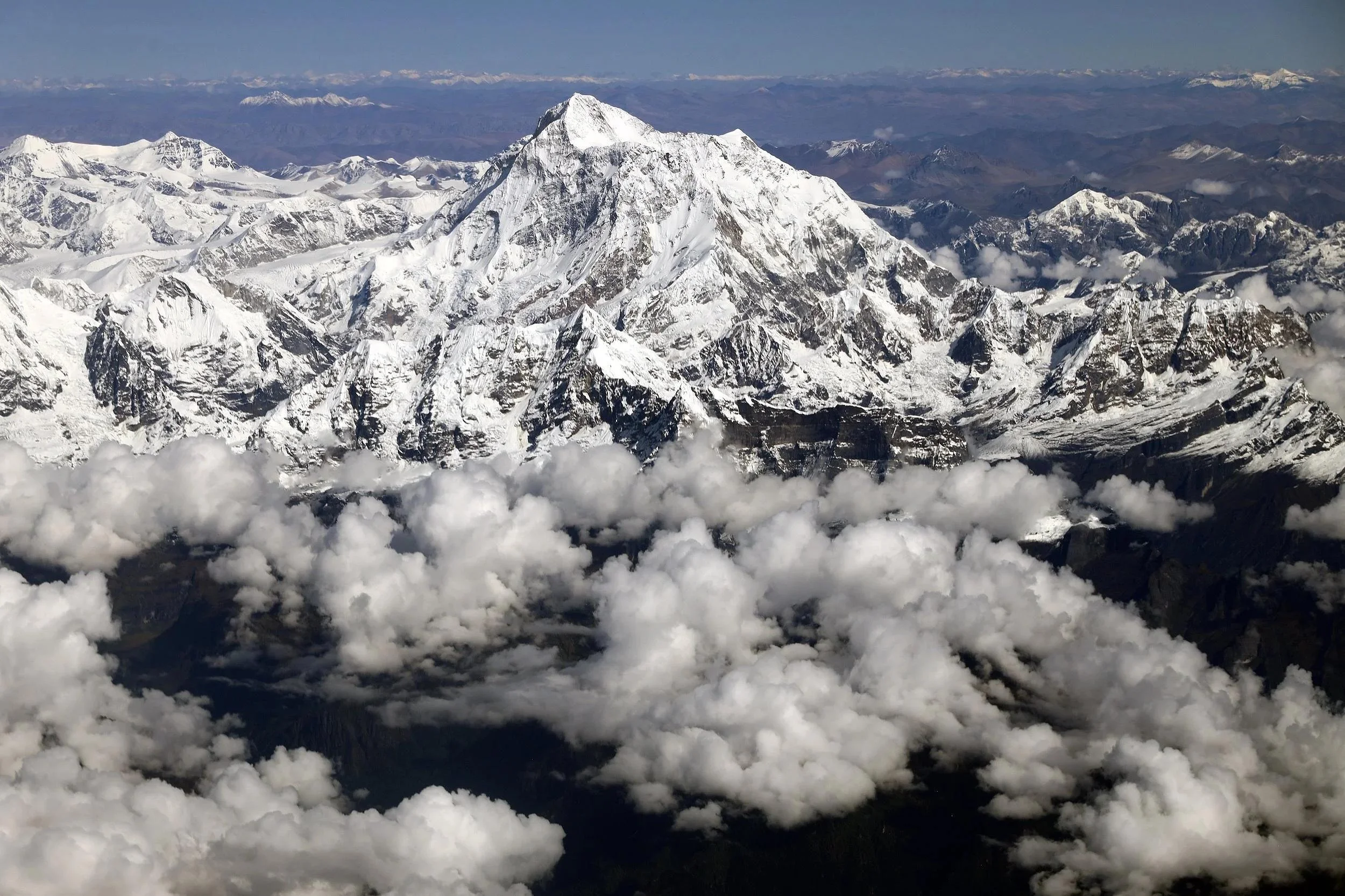
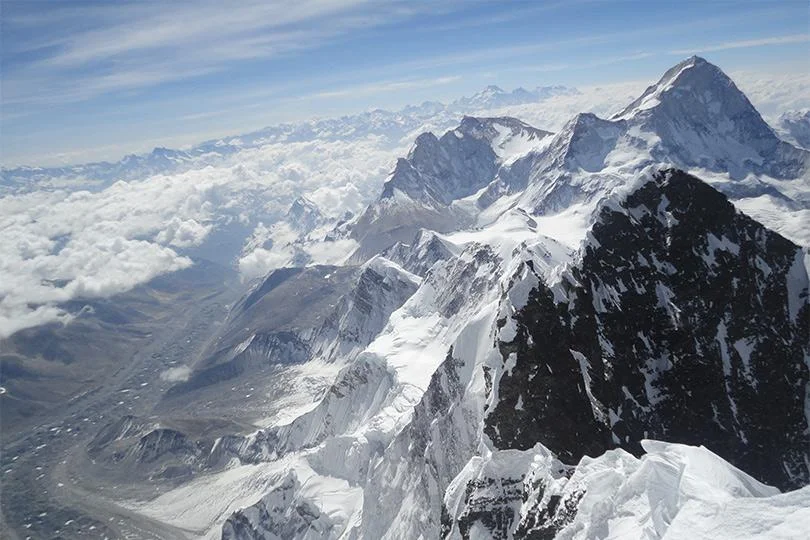
Mt. Makalu Expedition is an extraordinary Himalayan adventure to the summit of Mt. Makalu at 8,485 meters (27,838 ft), the fifth-highest mountain on Earth. Located in eastern Nepal near the Nepal–Tibet border, Makalu is famous for its distinctive four-sided pyramid shape, steep slopes, exposed ridges and technically demanding climbing sections.
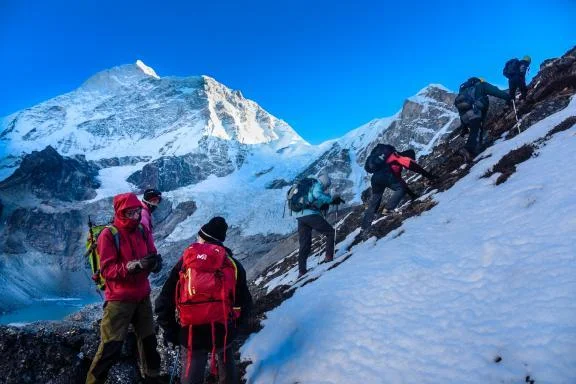
The expedition begins with a scenic journey from Kathmandu toward the remote Makalu region before continuing through traditional villages, dense forests, alpine valleys and glaciers. Climbers gradually acclimatize at higher elevations while establishing a series of camps toward the summit. The expedition combines wilderness trekking, high-altitude acclimatization and technical mountaineering, making it ideal for experienced climbers seeking a serious Himalayan challenge.
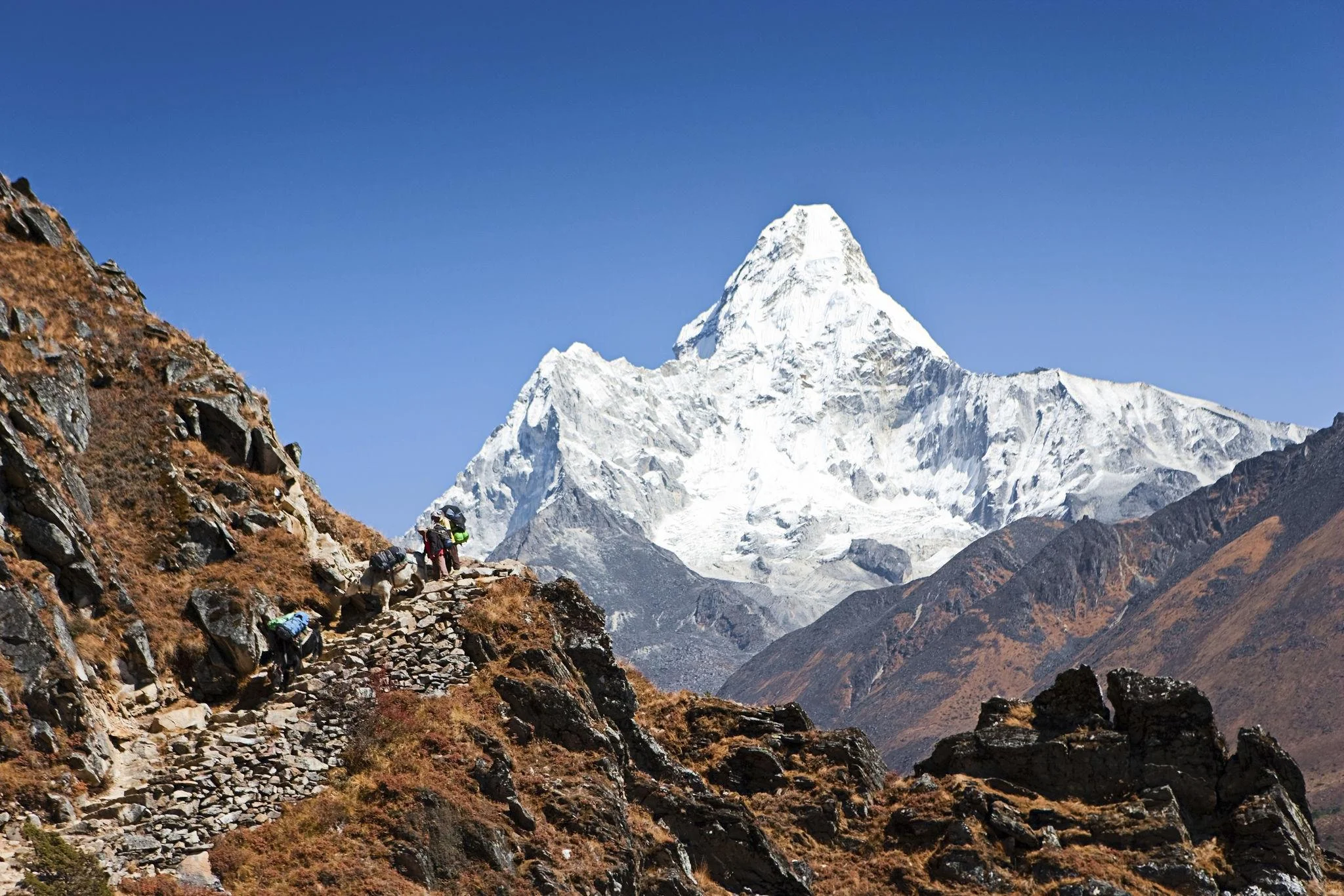
Mt. Ama Dablam Trekking Itinerary
Day 01: Arrival in Kathmandu
Arrive in Kathmandu and transfer to your hotel. Meet your trekking team and prepare for the adventure
Day 2: Expedition Preparation and Kathmandu Sightseeing
>> Complete permits, equipment checks and final expedition preparations.
Day 3: Fly Kathmandu to Tumlingtar and Drive to Num
>> Fly toward Tumlingtar and continue by road toward Num, the gateway to the Makalu region.
Day 4: Num – Seduwa
>> Trek through beautiful hills and forested trails to the village of Seduwa.
Day 5: Seduwa – Tashigaon
>> Continue through lush forests and traditional settlements toward Tashigaon.
Day 6: Tashigaon – Khongma Danda
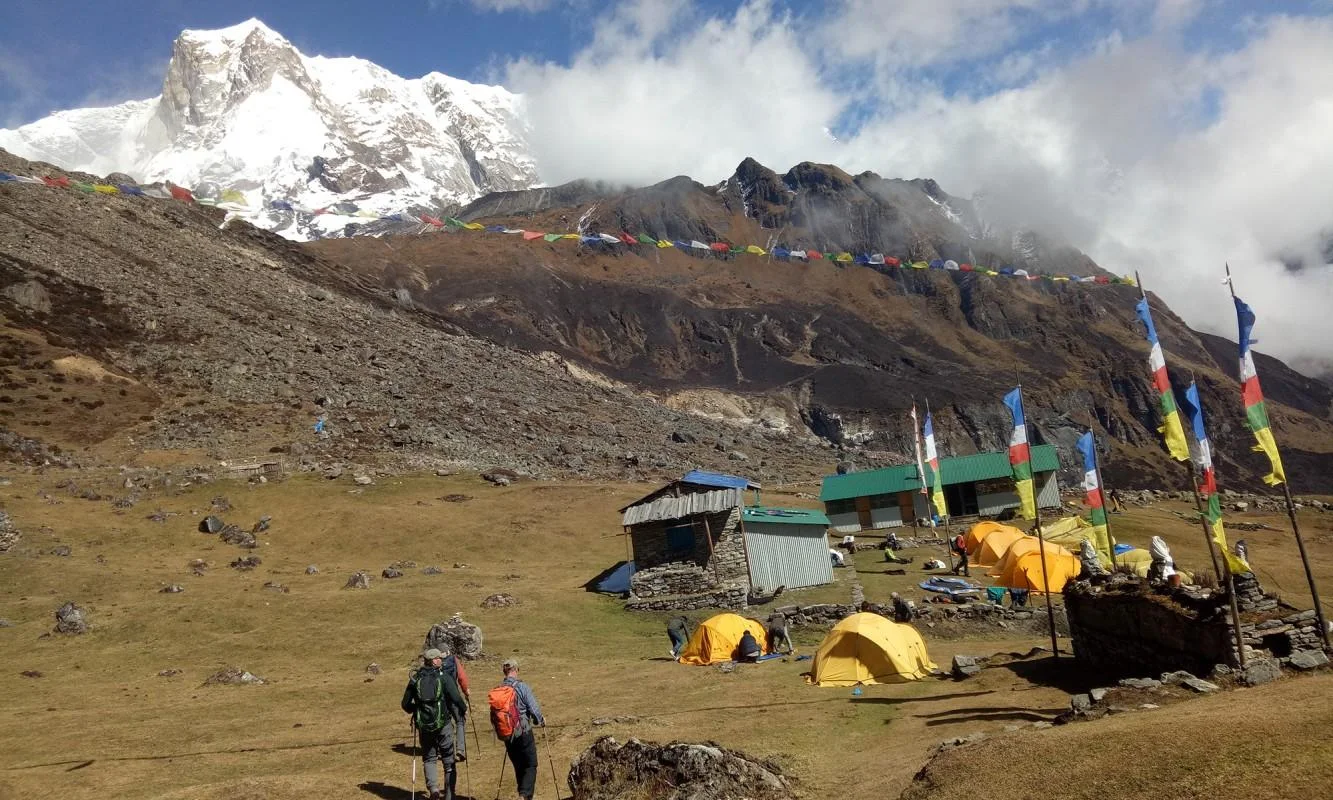
>> A challenging ascent takes you to Khongma Danda, with increasingly impressive mountain views.
Day 7: Khongma Danda – Mumbuk
>> Cross high mountain passes before descending through rhododendron and pine forests to Mumbuk.
Day 8: Mumbuk – Nehe Kharka
>> Trek through remote Himalayan terrain toward Nehe Kharka.
Day 9: Nehe Kharka – Makalu Base Camp
>> Continue through the stunning Makalu Valley and reach Makalu Base Camp, surrounded by spectacular peaks.
Day 10–30: Acclimatization & Climbing Period
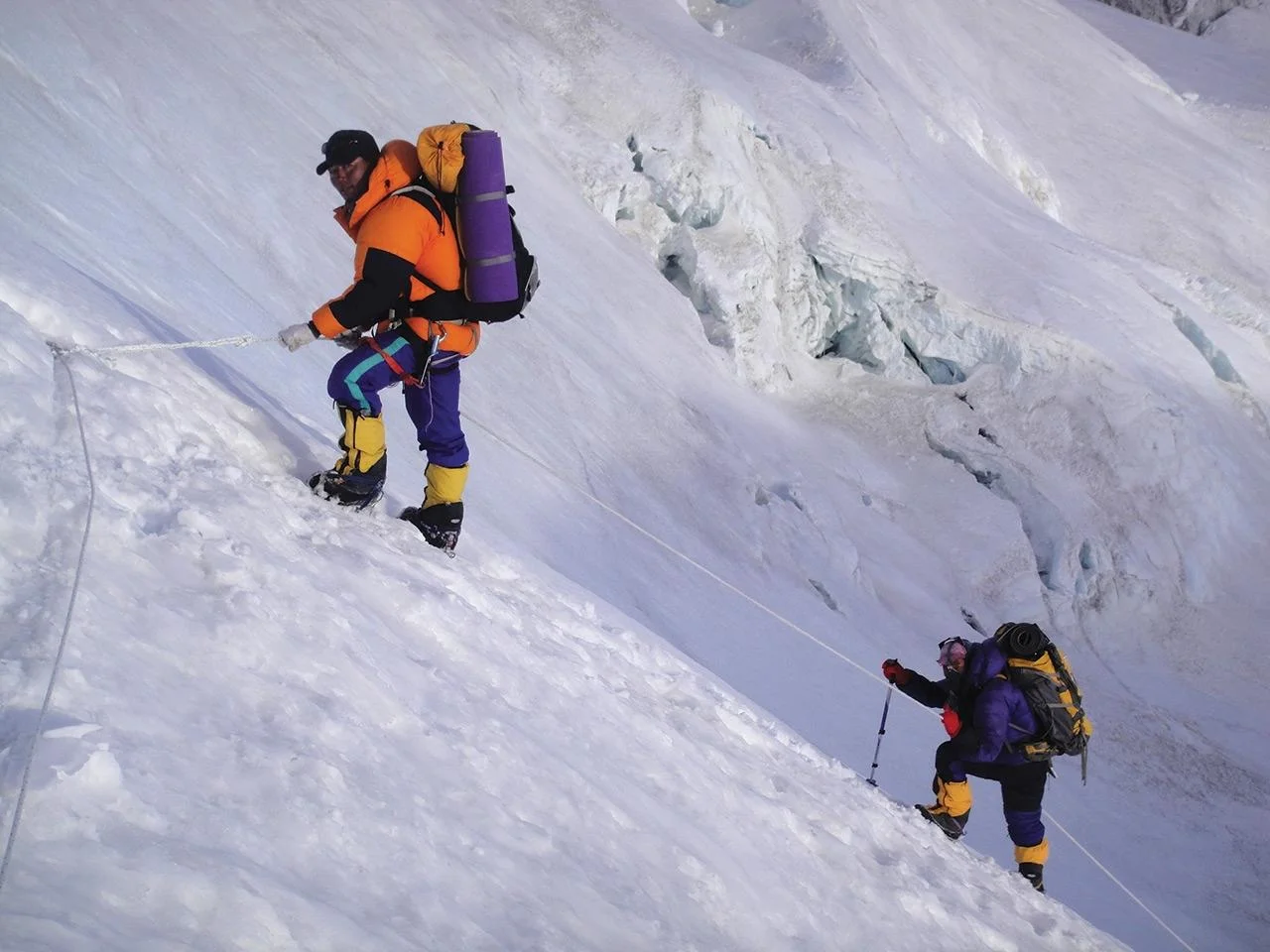
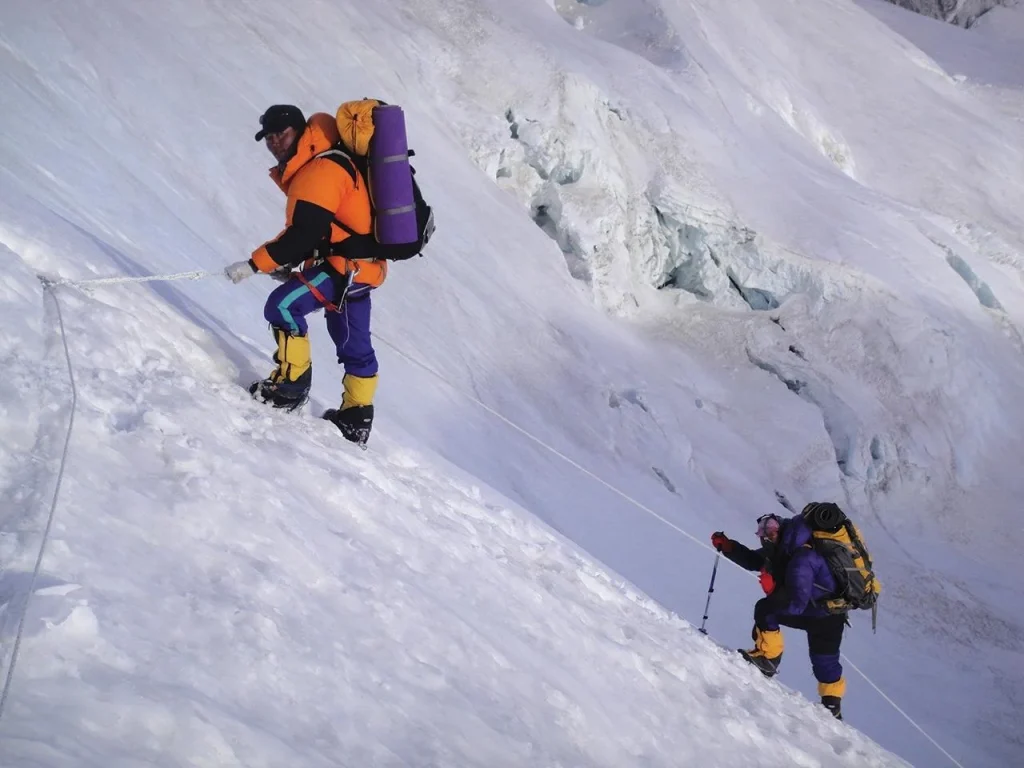
>> Spend time acclimatizing and preparing for the ascent. Climbers progressively move through higher camps while practicing essential climbing techniques and adapting to extreme altitude
Day 31: Summit Attempt – Mt. Makalu (8,485 m)
>> The major objective of the expedition is the summit attempt. Climbers make their way toward the summit depending on weather, route and physical conditions.
Day 32–36: Descent to Lower Camps
>> After the summit attempt, descend gradually through the higher camps toward the lower valleys.
Day 37: Return to Tumlingtar
>> Continue trekking and driving toward Tumlingtar.
Day 38: Fly to Kathmandu
>> Fly back to Kathmandu and enjoy a well-earned rest.
Day 39: Final Departure
>> Transfer to the airport for your onward journey.
Mt. Makalu Expedition – Route Description
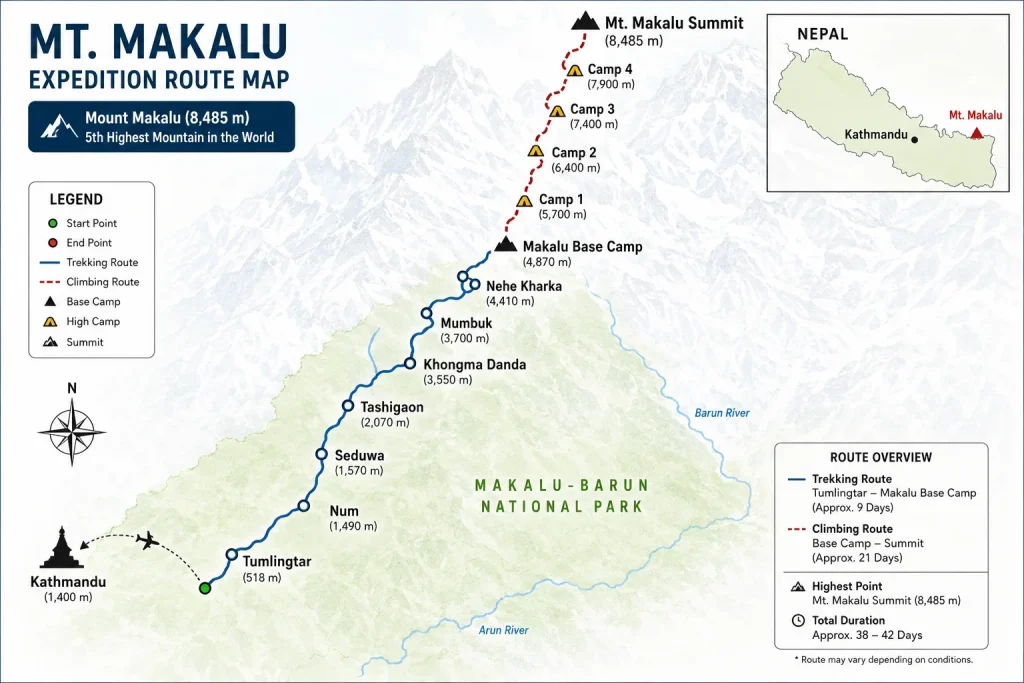
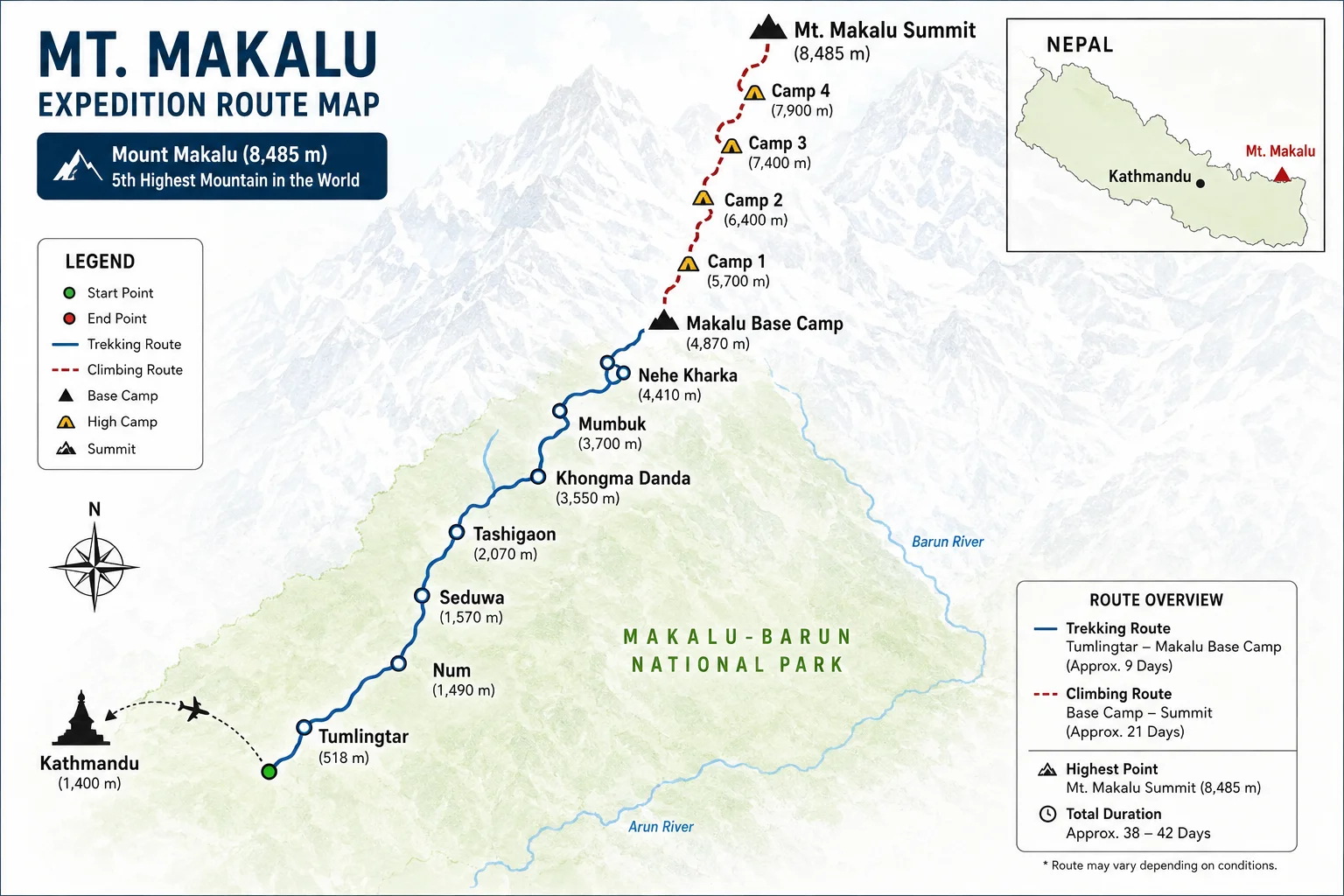
The Mt. Makalu Expedition begins in Kathmandu and continues by flight to Tumlingtar, followed by a drive to Num, the starting point of the trek. From Num, the trail passes through Seduwa, Tashigaon, Khongma Danda, Mumbuk, and Nehe Kharka before reaching Makalu Base Camp. From Base Camp, climbers gradually ascend through the higher camps—Camp I, Camp II, Camp III, and Camp IV—before making the final summit push to Mt. Makalu (8,485 m). The route offers spectacular Himalayan scenery and challenging high-altitude terrain throughout the expedition.
Essential Information
Location: Makalu-Barun National Park, Eastern Nepal
Height: 8,485 m (27,838 ft)
Difficulty: Very Challenging / Technical
Duration: Approximately 38–42 Days
Best Season: Spring (March–May) and Autumn (September–November)
Maximum Altitude: 8,485 m
Experience: Previous high-altitude climbing experience is essential
Fitness: Excellent physical fitness and endurance required
Permits: Makalu Expedition Permit and required conservation/local permits
Equipment: Complete high-altitude climbing and camping equipment required
Insurance: High-altitude climbing and emergency evacuation coverage recommended
Acclimatization: Adequate acclimatization and rest days are essential
Safety: Summit attempts depend on weather and mountain conditions.
Place You will Visit

Inclusinons And Exclusion
- International airfare and Nepal visa fees
- Hotel accommodation and meals in Kathmandu
- Personal travel and medical insurance
- Personal trekking equipment and clothing
- Extra meals, snacks, and beverages
- Hot showers, Wi-Fi, and battery charging fees
- Personal expenses and laundry
- Emergency helicopter evacuation
- Tips for guides, porters, and drivers
- Any services not mentioned under “Inclusions”
- International airfare to and from Nepal
- Nepal visa fees
- Personal travel and high-altitude insurance
- Personal climbing and trekking equipment
- Emergency helicopter evacuation
- Personal expenses and shopping
- Extra hotel nights in Kathmandu
- Food and drinks outside the included meals
- Tips for guides, Sherpas, cooks, and support staff
- Personal communication and internet expenses
- Medical expenses and rescue costs not covered by insurance
- Any additional costs caused by bad weather, flight delays, or unforeseen circumstances
- Summit bonus or other personal climbing-related expenses not specified in the package
Frequently Asked Questions:
1. How high is Mt. Makalu?
>> Mt. Makalu is 8,485 meters (27,838 ft) high and is the fifth-highest mountain in the world.
2. How difficult is the Makalu Expedition?
>>It is a very challenging technical expedition suitable for experienced mountaineers.
3. What is the best season for the expedition?
>> The best seasons are spring (March–May) and autumn (September–November).
4. How long does the Makalu Expedition take?
>> A complete expedition generally takes around 38–42 days, depending on conditions.
5. Do I need previous climbing experience?
>> Yes. Previous high-altitude and technical climbing experience is strongly recommended.
6. What permits are required?
>> Climbers need the appropriate Makalu climbing permit, conservation-area/national-park permits, and other applicable local permits.
7. What equipment is required?
>> Technical climbing equipment, high-altitude clothing, crampons, ice axe, harness, helmet, sleeping bag, and camping equipment are required.
8. Is acclimatization included?
>>Yes. The expedition schedule includes acclimatization and rest periods to help climbers safely adapt to high altitude.
9. Is travel insurance required?
>> Comprehensive insurance covering high-altitude climbing and emergency evacuation is strongly recommended.
10. Can the itinerary change?
>> Yes. The itinerary may be adjusted according to weather, route conditions, health, and safety requirements.