



Trip Highlights
- Summit Mt. Lhotse at 8,516 m, the world's fourth-highest mountain.
- Experience a challenging 8,000-meter-class mountaineering expedition.
- Enjoy spectacular views of Everest, Nuptse, Makalu, Cho Oyu, and Ama Dablam.
- Explore the legendary Everest Base Camp and Khumbu region.
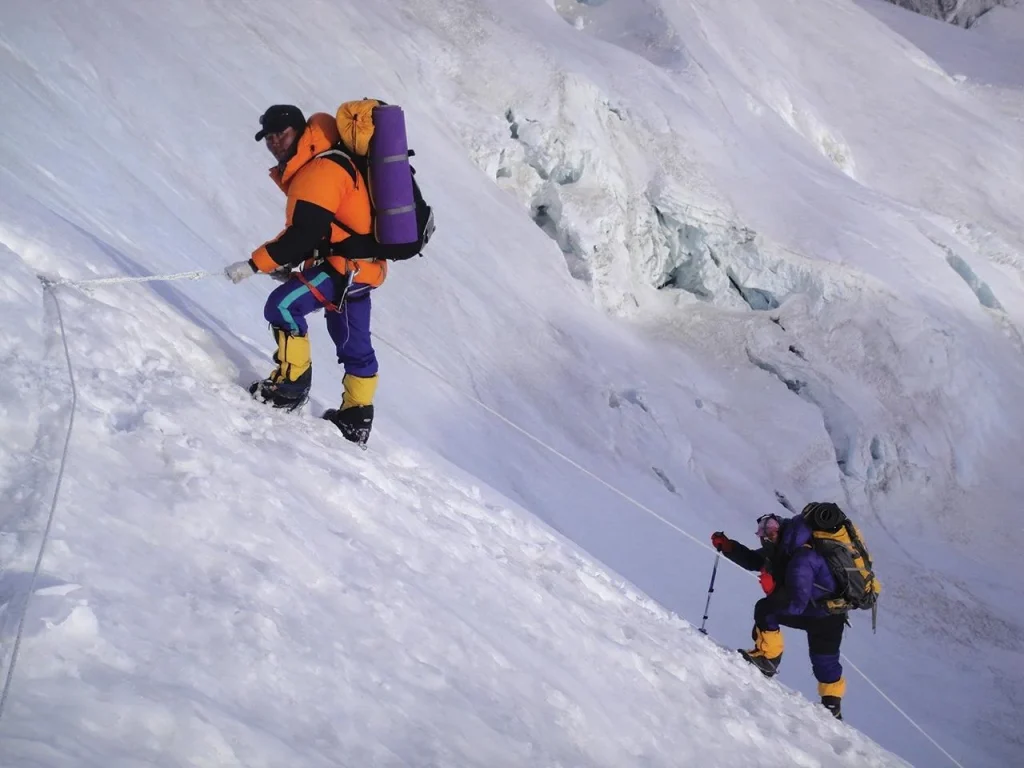
- Experience technical climbing through glaciers, steep snow and ice sections.
- Visit famous Sherpa settlements including Lukla, Namche Bazaar, Tengboche, and Dingboche.
- Experience Sherpa culture and visit ancient Himalayan monasteries.
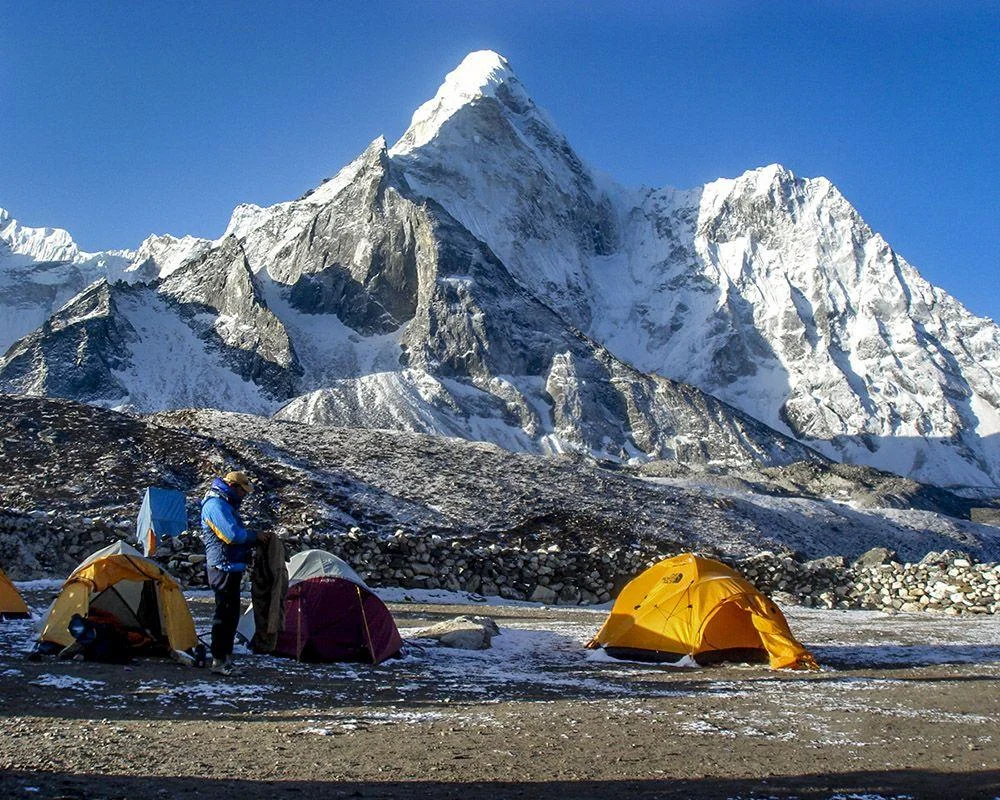
- Witness spectacular Himalayan sunrises and sunsets from high-altitude camps.
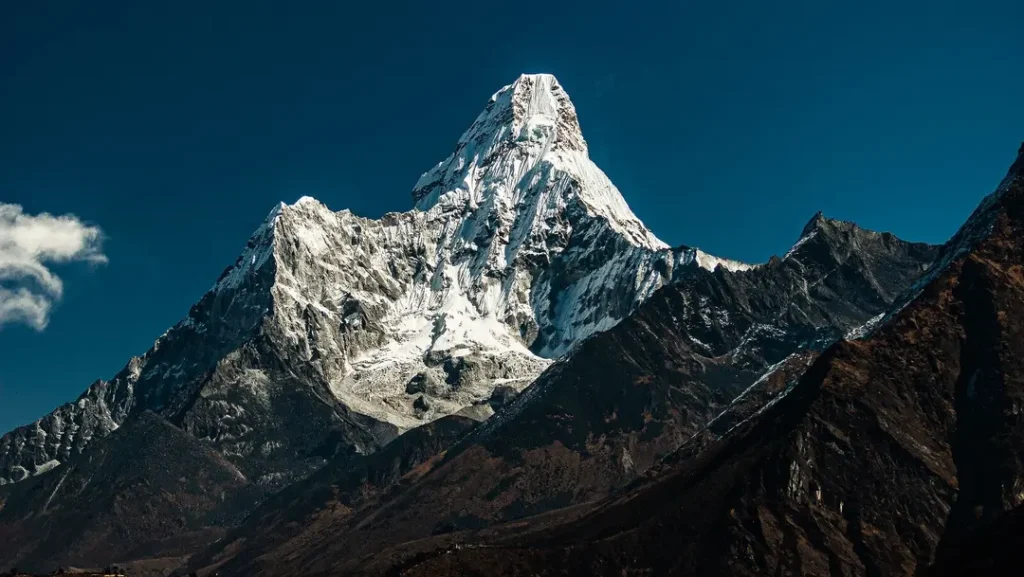
Overview
Mount Lhotse, standing at 8,516 meters (27,940 ft), is the fourth-highest mountain in the world and lies directly beside Mount Everest in the Khumbu region of Nepal. The name “Lhotse” means “South Peak” in Tibetan, reflecting its position south of Everest.
The Lhotse Expedition is a demanding high-altitude mountaineering adventure that combines technical climbing, extreme altitude, glacier travel, and breathtaking Himalayan scenery. The standard route follows the Everest region through Lukla, Namche Bazaar, Tengboche, Dingboche, and Everest Base Camp before continuing toward Lhotse Base Camp and the higher camps.

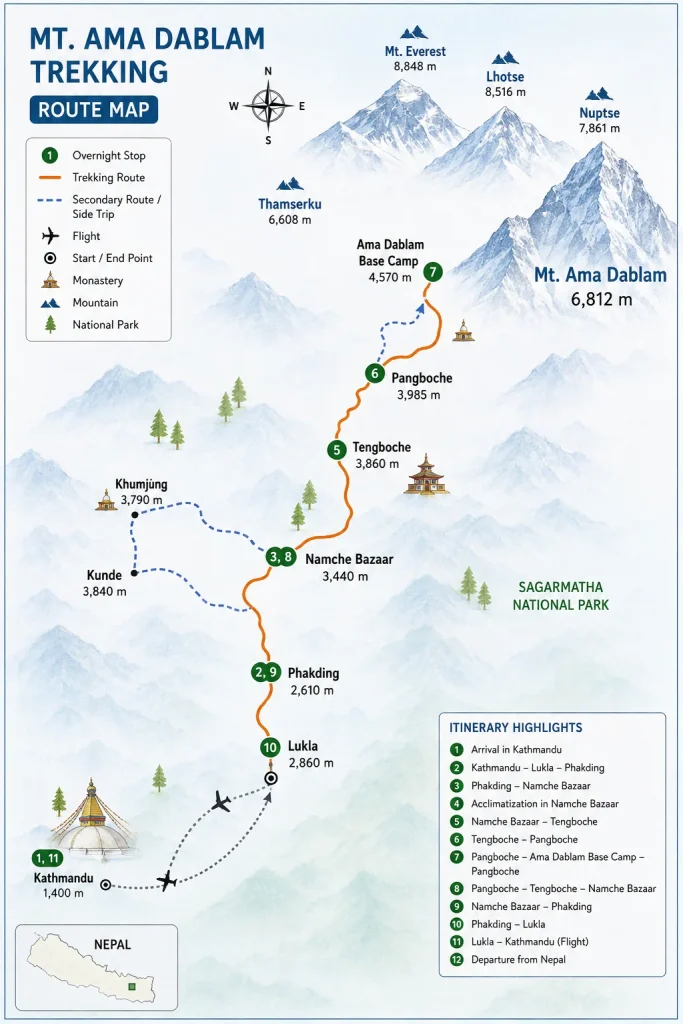
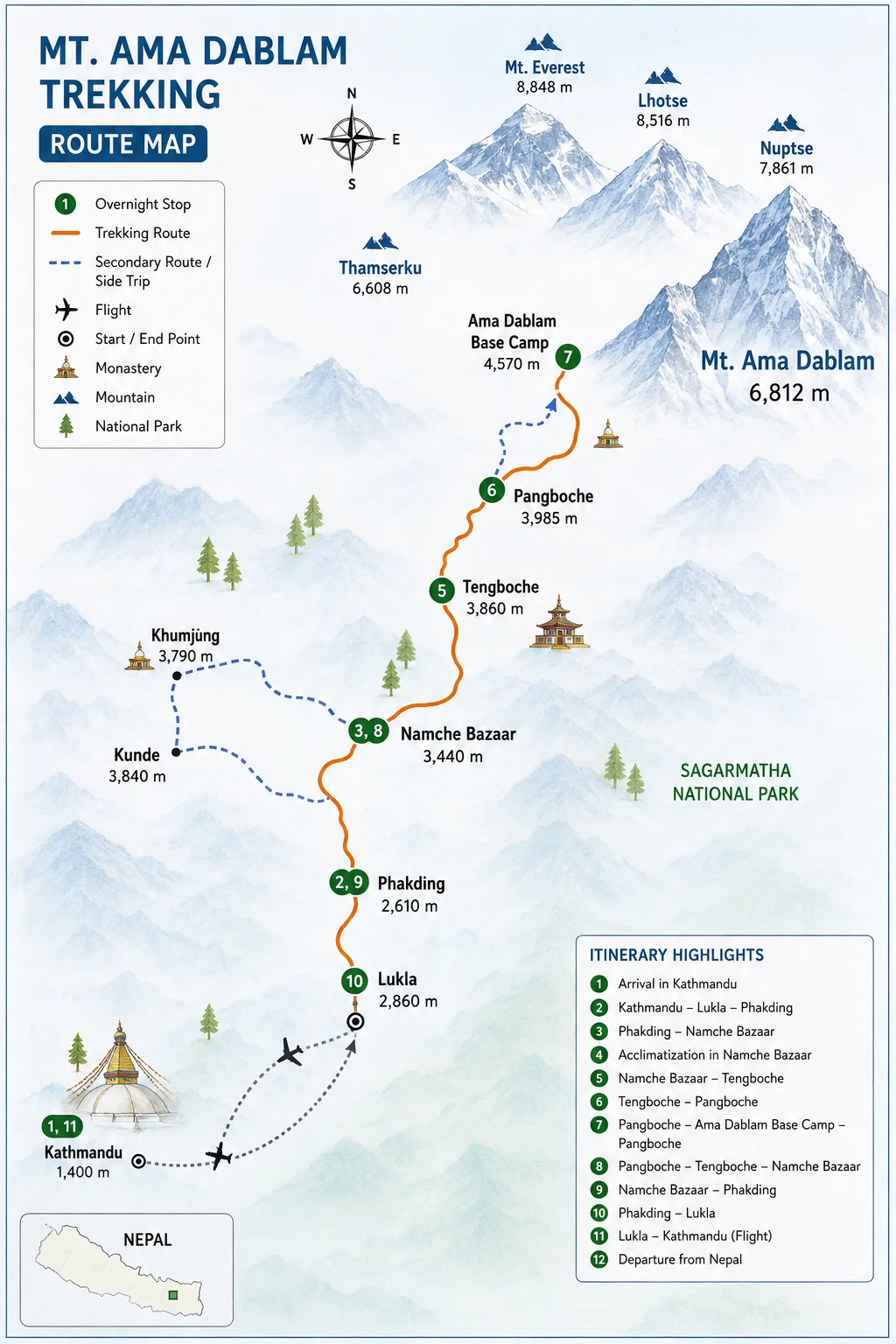
Mt. Ama Dablam Trekking Itinerary
Day 01: Arrival in Kathmandu
Arrive in Kathmandu and transfer to your hotel. Meet your trekking team and prepare for the adventure
Day 02: Kathmandu – Expedition Preparation
Final preparations, equipment checking, permit arrangements, and briefing with the climbing team.
Day 03: Day 03: Fly to Lukla – Trek to Phakding – 2,610 mPhakding – Namche Bazaar
Short scenic flight to Lukla followed by a gentle trek to Phakding through beautiful mountain landscapes.
Day 04: Phakding to Namche Bazaar – 3,440 m
Trek along the Dudh Koshi River and enter the Sagarmatha National Park before reaching Namche Bazaar.
Day 05: Acclimatization at Namche Bazaar
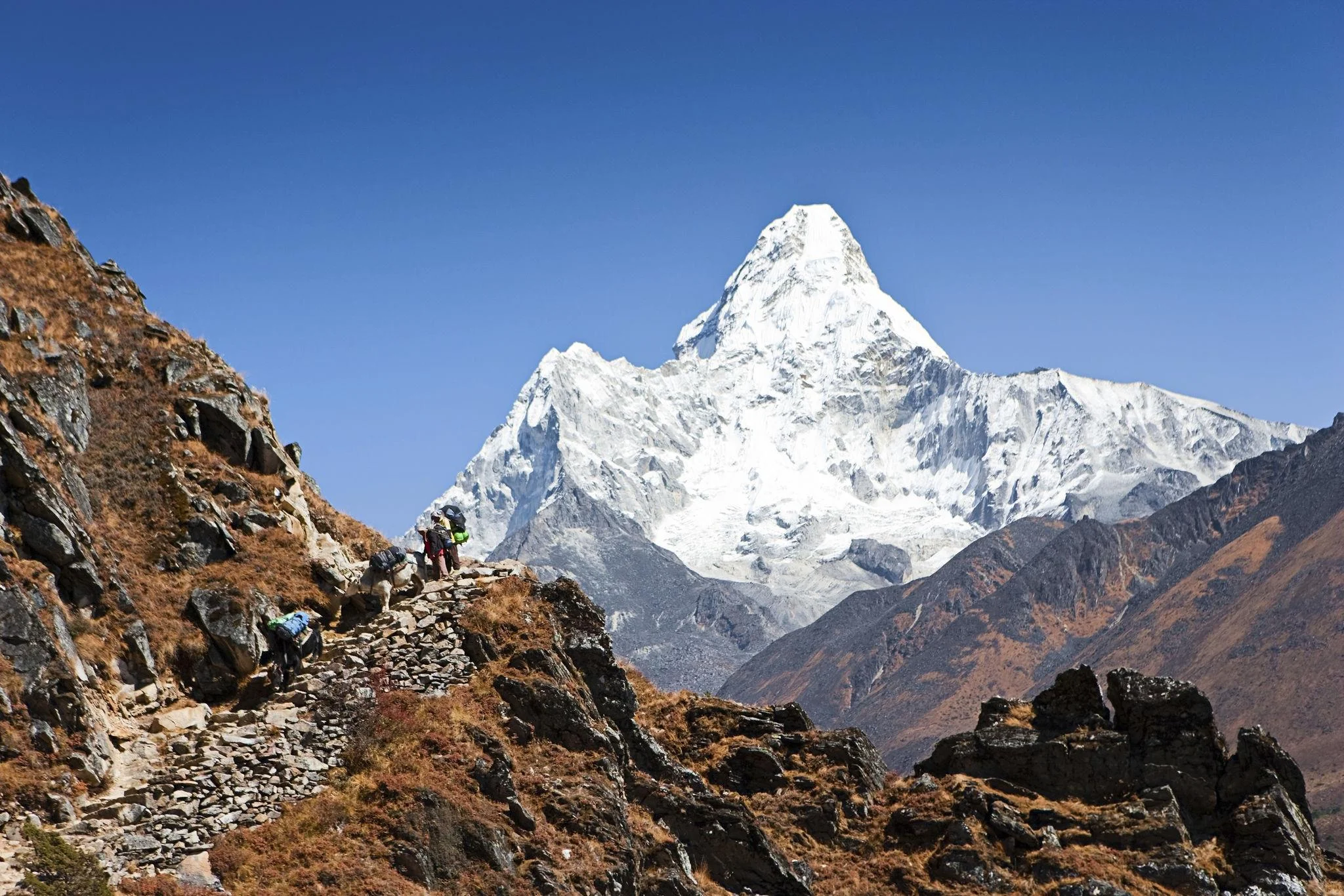
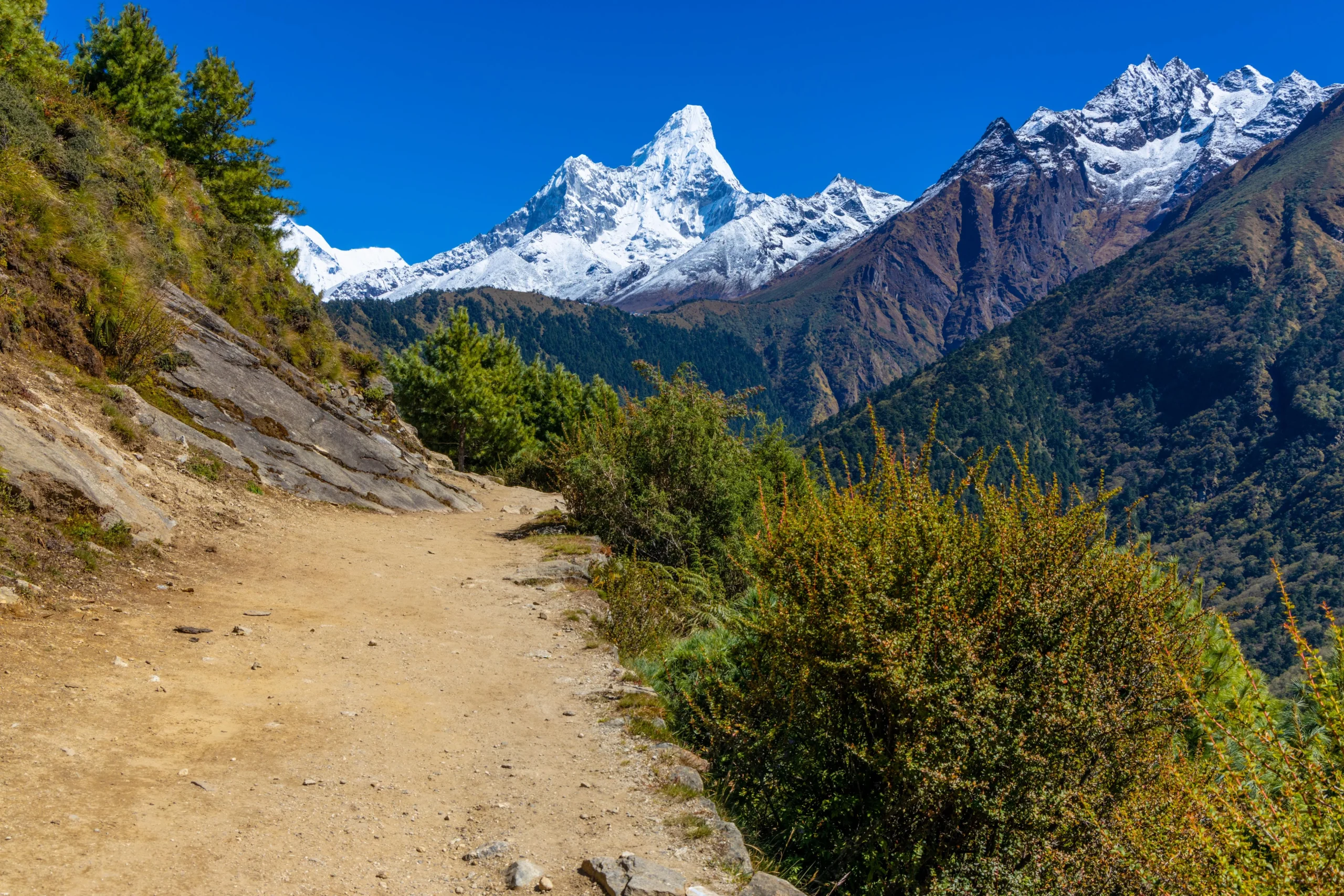
Rest and acclimatization day. Explore Namche and enjoy views of Everest, Ama Dablam, and surrounding peaks.
Day 06: Namche to Tengboche – 3,860 m
Trek through rhododendron forests toward Tengboche and visit the famous Tengboche Monastery.
Day 07: Tengboche to Dingboche – 4,410 m
Continue through beautiful alpine landscapes and traditional Sherpa villages to Dingboche.
Day 08: Acclimatization at Dingboche
Rest and acclimatization day with a short hike to higher elevations for better altitude adaptation.
Day 09: Dingboche to Lobuche – 4,910 m
Trek through the Khumbu Valley, passing memorials dedicated to climbers before reaching Lobuche.
Day 10: Lobuche to Everest Base Camp – 5,364 m
Trek along the Khumbu Glacier to Everest Base Camp and experience the spectacular expedition atmosphere.
Day 11: Everest Base Camp to Lhotse Base Camp
Move toward Lhotse Base Camp and prepare for the technical climbing phase of the expedition.
Day 12–15: Acclimatization & Training at Base Camp
Rest, acclimatization, climbing practice, equipment checks, and preparation for higher camps.
Day 16–20: Lhotse Camp I & Camp II
Climb through the Khumbu Icefall and continue toward higher camps while following a carefully planned acclimatization schedule.
Day 21–25: Camp III & Summit Preparation
Climb toward Camp III, practice technical sections, descend for recovery, and prepare for the summit push.
Day 26–28: Summit Push – Mt. Lhotse – 8,516 m
Begin the final ascent through steep snow and ice terrain. Reach the summit of Mt. Lhotse, weather permitting, and descend safely to lower camps.
Day 29–31: Return to Lhotse Base Camp
Descend from the high camps and return to Base Camp for recovery and expedition completion.
Day 32–34: Base Camp to Namche Bazaar
Retrace the route through Lobuche, Dingboche, Tengboche, and Namche Bazaar.
Day 35: Namche to Lukla
Final trekking day through the Khumbu region to Lukla.
Day 36: Fly Lukla to Kathmandu
Scenic flight back to Kathmandu and transfer to the hotel.
Day 37: Kathmandu – Free Day
Free day for rest, sightseeing, shopping, or enjoying Kathmandu.
Day 38: Final Departure
Transfer to the airport for your onward journey, marking the end of the Mt. Lhotse Expedition.
Essential Information
Mt. Lhotse stands at 8,516 m (27,940 ft) and is the world’s fourth-highest mountain. The expedition is extremely challenging and requires excellent fitness, technical climbing skills, and previous high-altitude experience. The best seasons are spring (April–May) and autumn (September–October). Proper acclimatization, experienced Sherpa support, suitable climbing equipment, permits, and comprehensive high-altitude insurance are essential. Climbers should be prepared for extreme cold, strong winds, glaciers, steep snow and ice, and altitude-related risks. Summit success depends on weather, route conditions, acclimatization, and the climber’s physical condition.
Place You will Visit
Inclusinons And Exclusion
- Airport pickup and drop-off in Kathmandu.
- Hotel accommodation in Kathmandu as per the itinerary.
- Domestic flights between Kathmandu and Lukla.
- Teahouse accommodation during the trekking period.
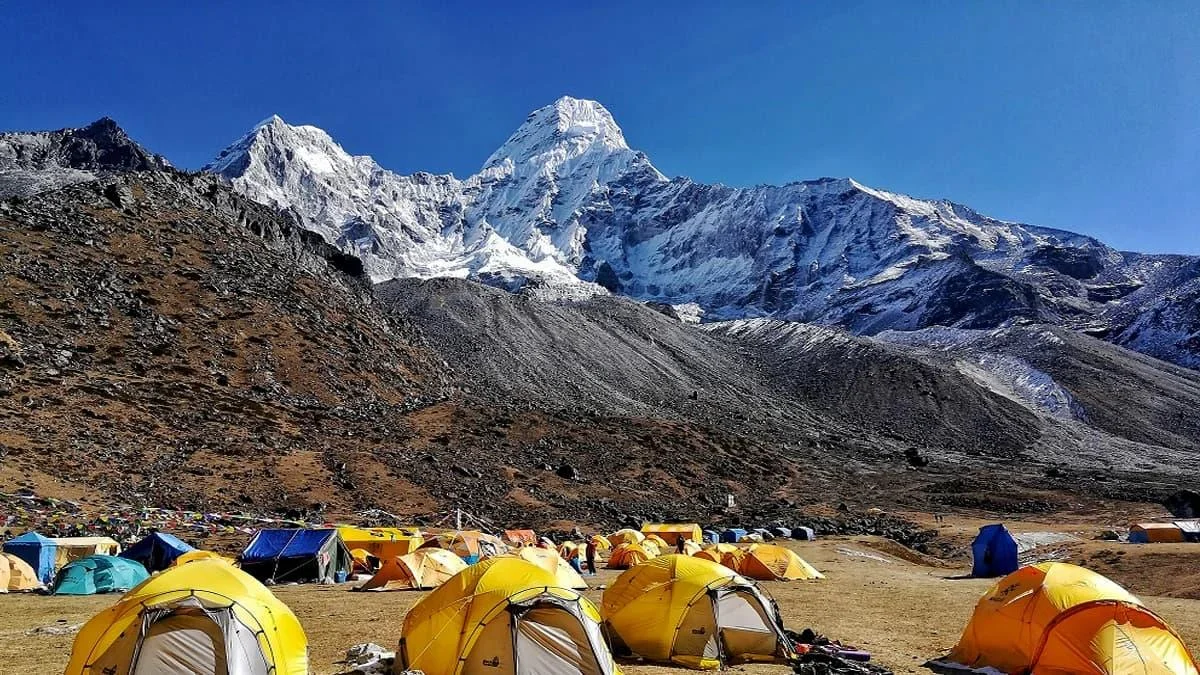
- Camping accommodation at Lhotse Base Camp and higher camps.
- Full-board meals during the expedition and trekking period.
- Experienced expedition leader, climbing Sherpas, guides, and porters.
- Necessary climbing and trekking permits.
- National park and local area permits.
- Base Camp services, tents, kitchen, dining, and toilet facilities.
- Group climbing equipment and necessary expedition logistics.
- Insurance and allowances for expedition staff.
- Government taxes and applicable service charges.
- International airfare to and from Nepal.
- Nepal entry visa and personal travel expenses.
- Personal climbing equipment and clothing.
- Travel and high-altitude rescue insurance.
- Personal medical expenses and emergency evacuation costs.
- Extra hotel nights and meals in Kathmandu.
- Personal communication, internet, and telephone expenses.
- Bottled water, alcoholic drinks, and personal beverages.
- Personal snacks and extra food.
- Tips for guides, Sherpas, porters, and support staff.
- Any costs caused by bad weather, flight delays, natural disasters, or unforeseen circumstances.
- Any services not specifically mentioned under the inclusions.
Frequently Asked Questions:
1. How difficult is the Lhotse Expedition?
>> It is an extremely challenging technical expedition suitable for experienced mountaineers with previous high-altitude climbing experience.
2. What is the best season for the Lhotse Expedition?
>>The main climbing seasons are spring (April–May) and autumn (September–October).
3. How long does the expedition take?
>> A complete Lhotse Expedition generally takes around 6–8 weeks, including acclimatization, climbing, summit attempts, and return.
Do I need4. previous climbing experience?
>> Yes. Previous experience on high-altitude peaks and familiarity with technical climbing equipment are strongly recommended.
5. What major risks are involved?
>> Major risks include extreme cold, avalanches, crevasses, altitude sickness, strong winds, and rapidly changing weather.
6. Is acclimatization included?
>> Yes. The itinerary includes planned acclimatization days and climbing rotations to help climbers adapt to high altitude.